English
Listen
MENU
Kanahus in water

TATAU - Freedom | Identity | Memory

On display until January 10, 2027

What does a tattoo reveal about the person who wears it? In the exhibition TATAU – Freedom | Identity | Memory, we encounter women’s tattoos from different parts of the world – stories etched into the skin about identity, belonging, and memory.

Purchase annual pass

Guided tours


TATAU – Freedom | Identity | Memory

Tattoos one of humanity’s oldest forms of expression. Throughout history, tattoos have been used to mark identity, life transitions, spirituality, and social belonging. In many cultures, they also function as a living language passed between generations.

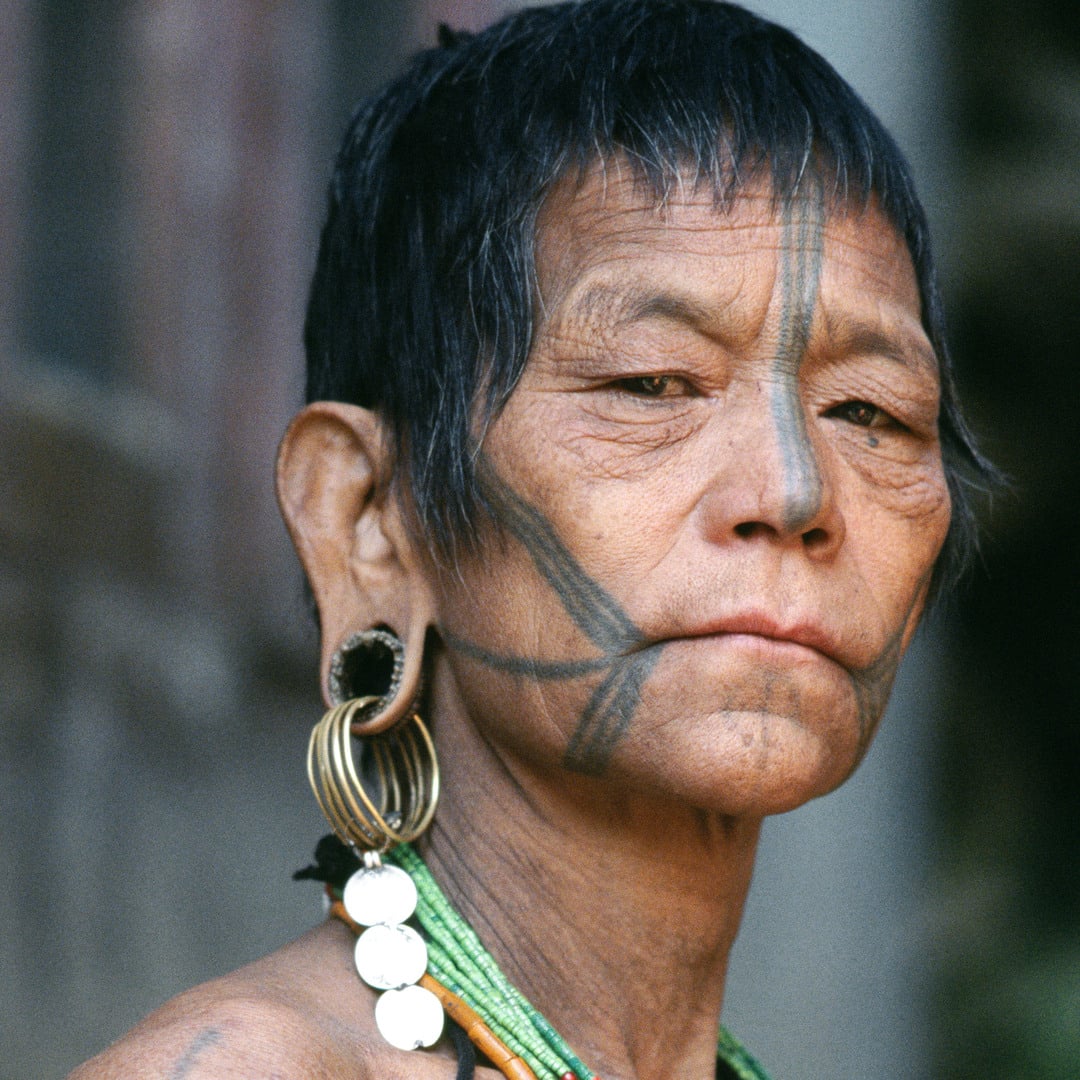
In TATAU, we meet women from Tahiti, Canada, Kurdistan, North Africa, the Balkans, the Arctic, Asia, New Zealand, and Sweden. Their tattoos carry stories of family, motherhood, spirituality, resistance, and cultural identity. Many of these tattooing traditions have been threatened or suppressed through colonialism, religious norms, and social change, but are today being revived by new generations.
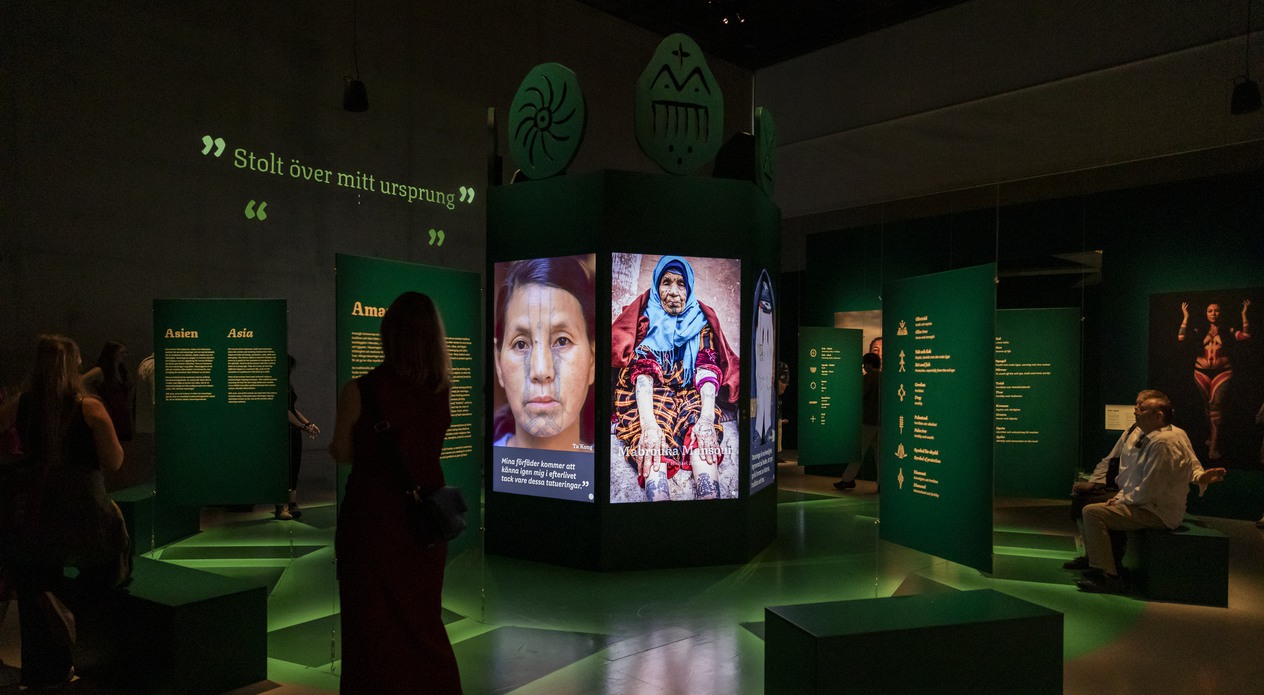
The exhibition also highlights women’s role in tattoo history – both as carriers of tradition and as active agents in the renewal of cultural expression. Here, tattooing emerges as a tool for memory, healing, and resistance, as well as a way of reconnecting with roots and creating meaning in the present.

TATAU shows that tattoos are more than images on the skin. They are living cultural heritage and personal stories of freedom, identity, and belonging – shaped over time, yet carried in the present.

TATAU is produced by the National Museums of World Culture, Sweden, 2026.
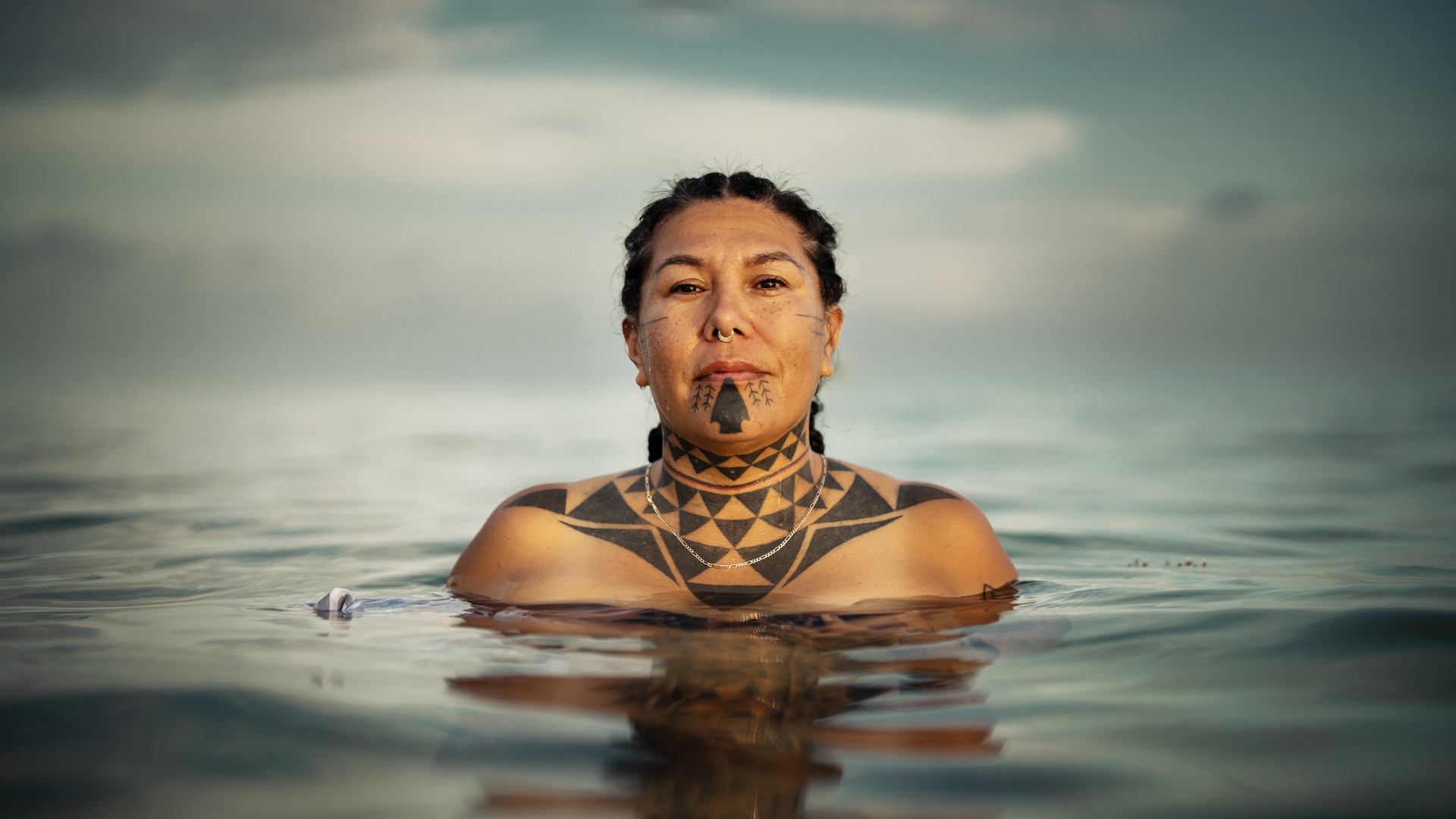
 

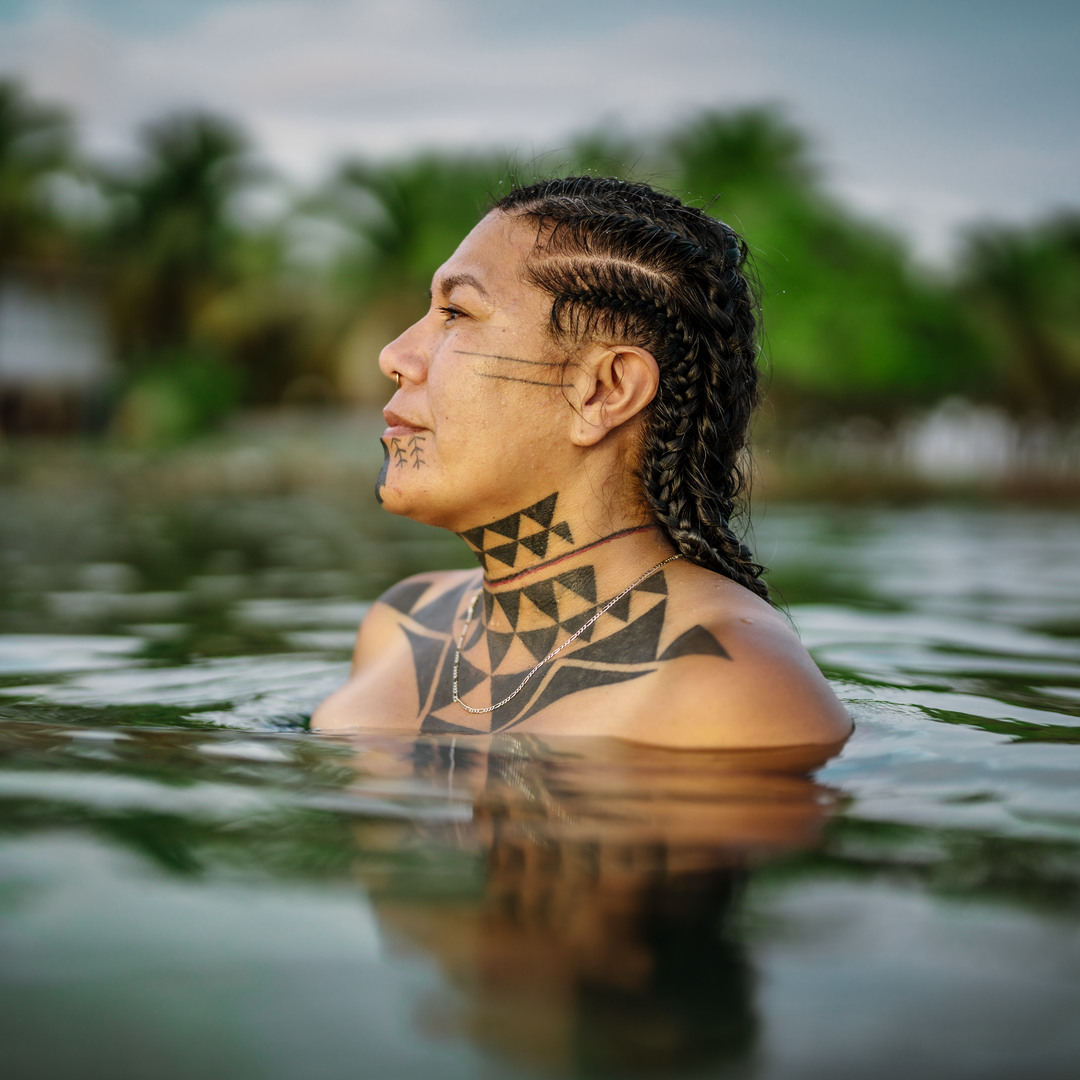
Kanahus in water

Kanahus “Freedom” Manuel

"This tattoo is a warrior tattoo representing the Secwepemc and Ktunaxa mountains, which we are fighting to defend against settler-colonial Canada."

Kanahus “Freedom” Manuel is a well-known Indigenous activist who belongs to the Secwépemc (Shuswap) and Ktunaxa peoples of British Columbia, Canada.


Tattoo by: Naualli Ñuu Savi 
Photo by: Cody Lucich

Place: Kanada


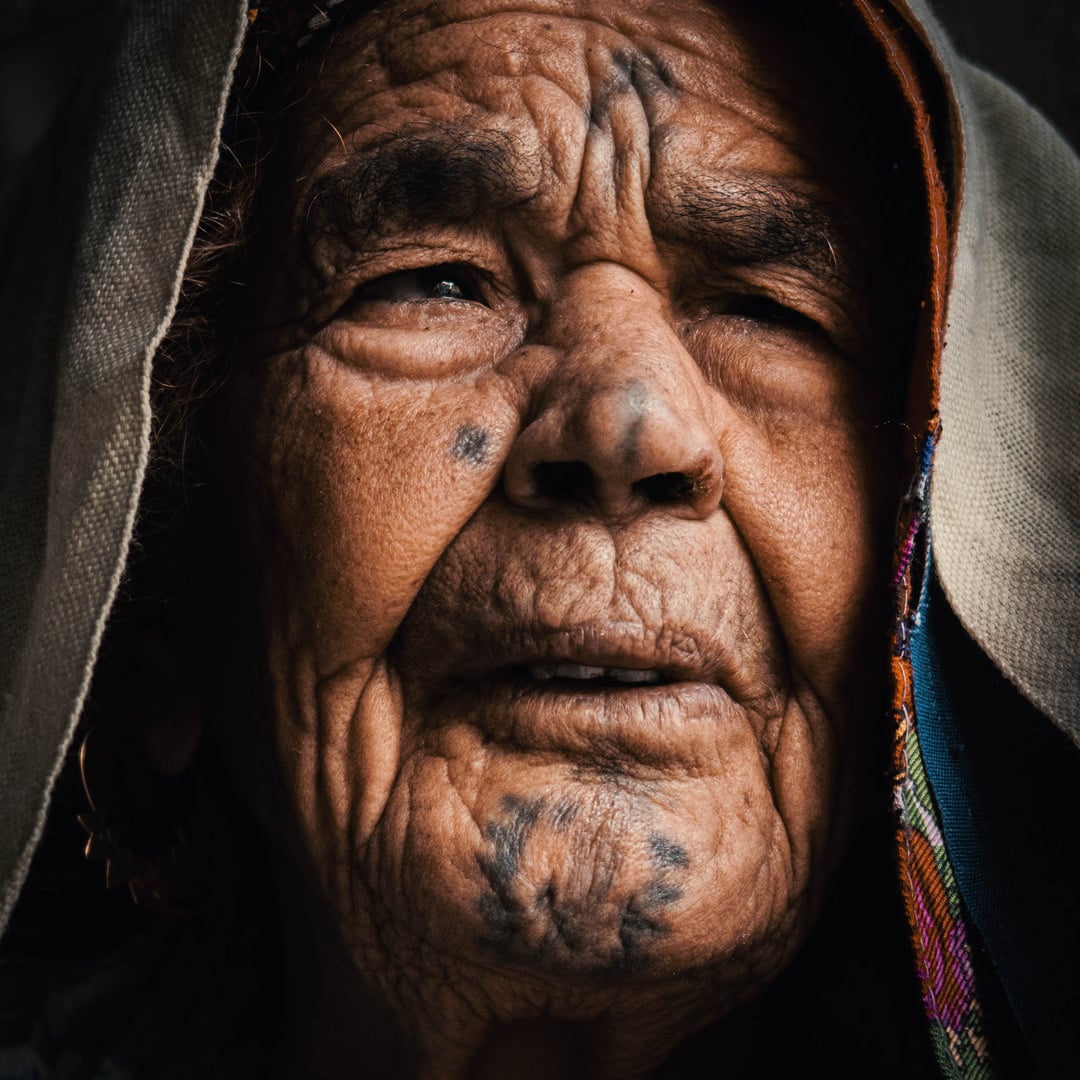
Esme Maria with face tattoos

Esme Maria

"I just gave them my face, and they tattooed it."

Like many others of her generation, Esme Maria had her first tattoos done as a young girl. Few old women still wear these tattoos due to the influence of Islam. Esme Maria hopes that this unique and ancient tradition will one day return and be accepted again.

Photographer: Michael Zomer

Place: Tunisien 

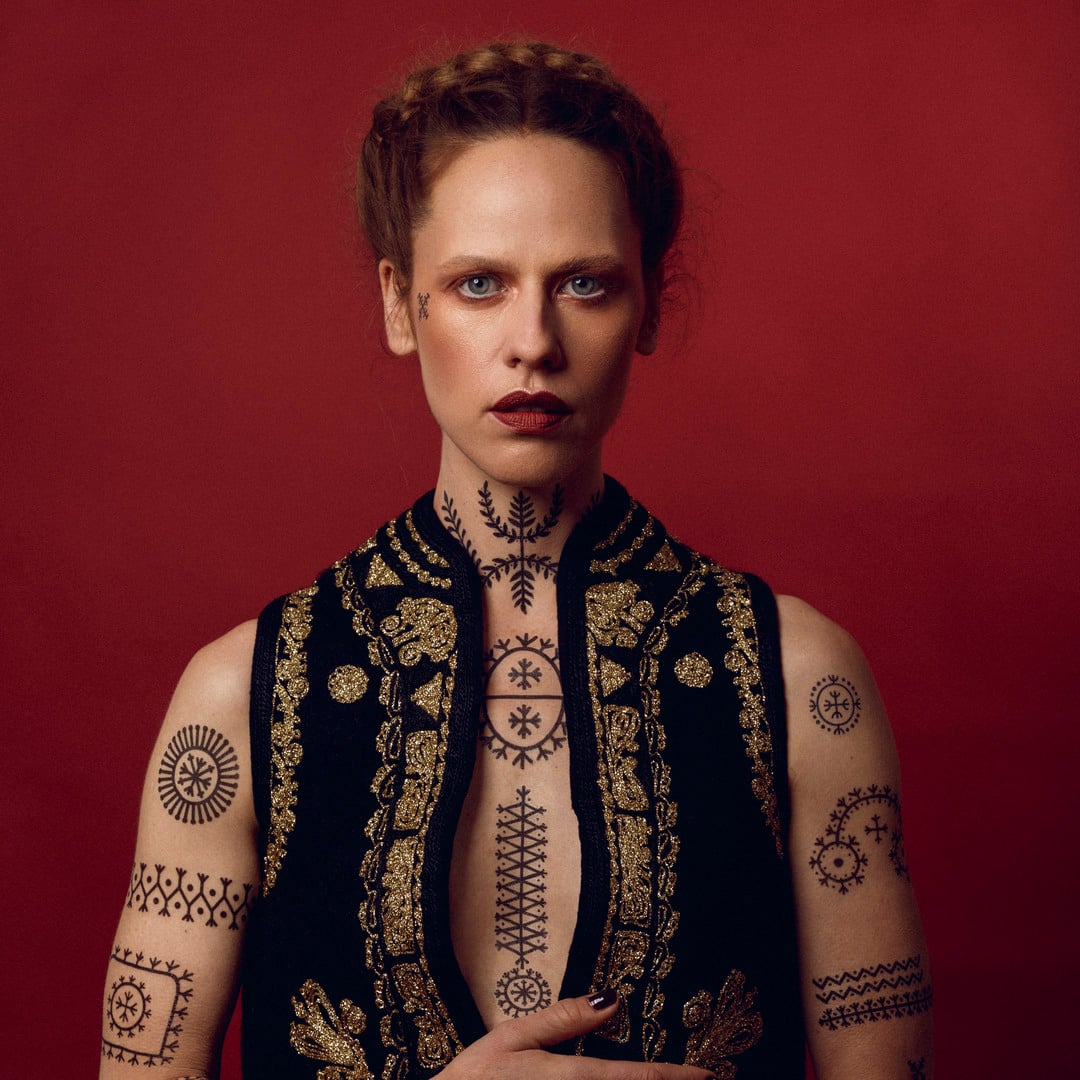
Eva with her traditional tattoos

Eva Balažin

"My project, Traditional Croatian Tattoos, is deeply meaningful to me. It has pushed me to face the shared trauma of my people and transform it through creativity and connection."

Eva Balažin is the founder of the project Traditional Croatian Tattoos. The project is working with documenting and recreating the traditional motifs from Croatia and Bosnia Herzegovina.

Photographer: Doris Fatur

Place: Kroatien

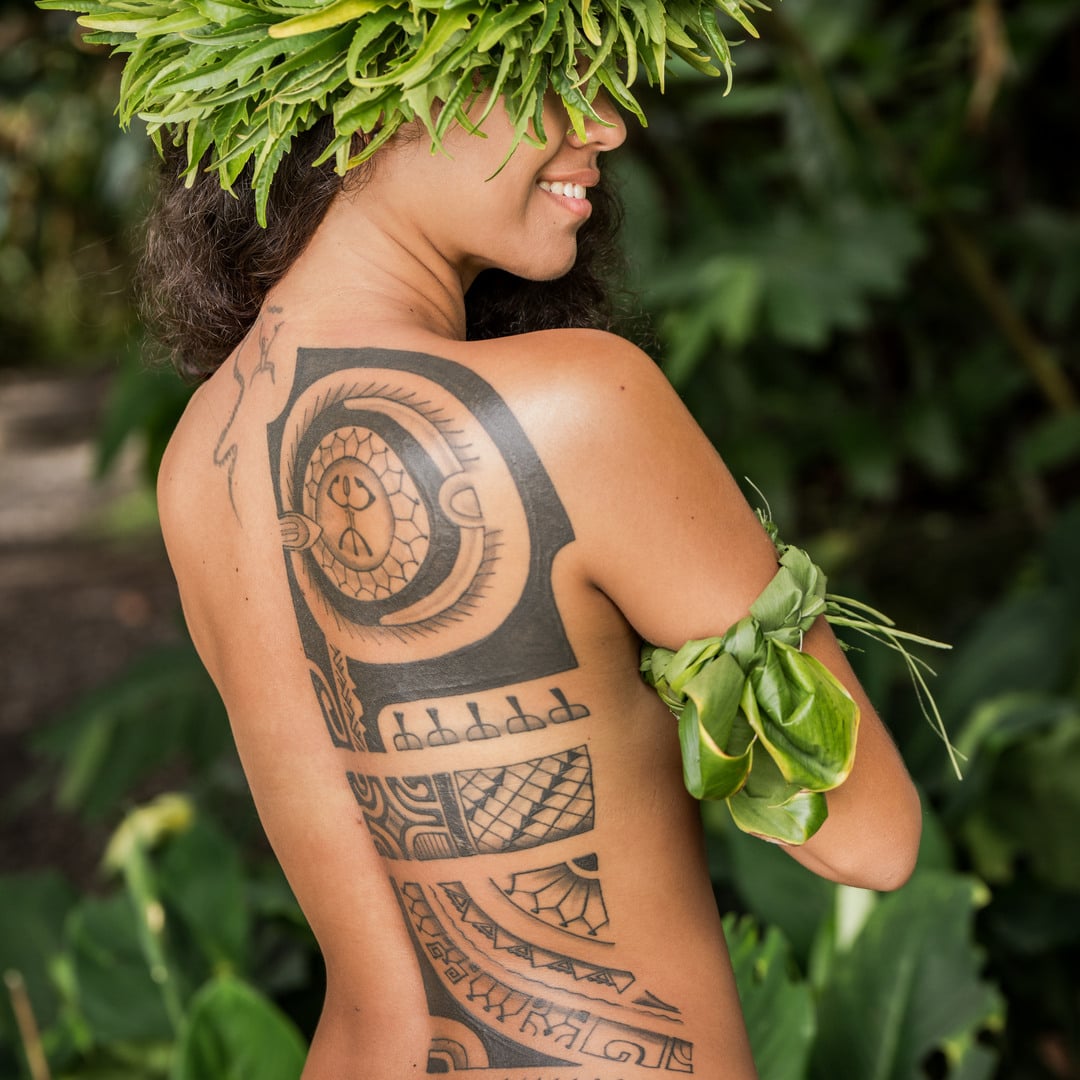
Teruria showing her back tattoos

Teruria Taimāna

"My tattoos are a form of living heritage. Each motif represents a phase of my life - my personal journey, my passions, my children, and my family ties. They are a way of remembering where personal stories and collective tradition coexist on the same living surface."

The tattoo on Teruria’s back tells a story of fertility and femininity. The motif is traditionally associated with creation and abundance, reflecting the ability to give life. 

Photographer: Stéphane Maillon

Place: Tahiti

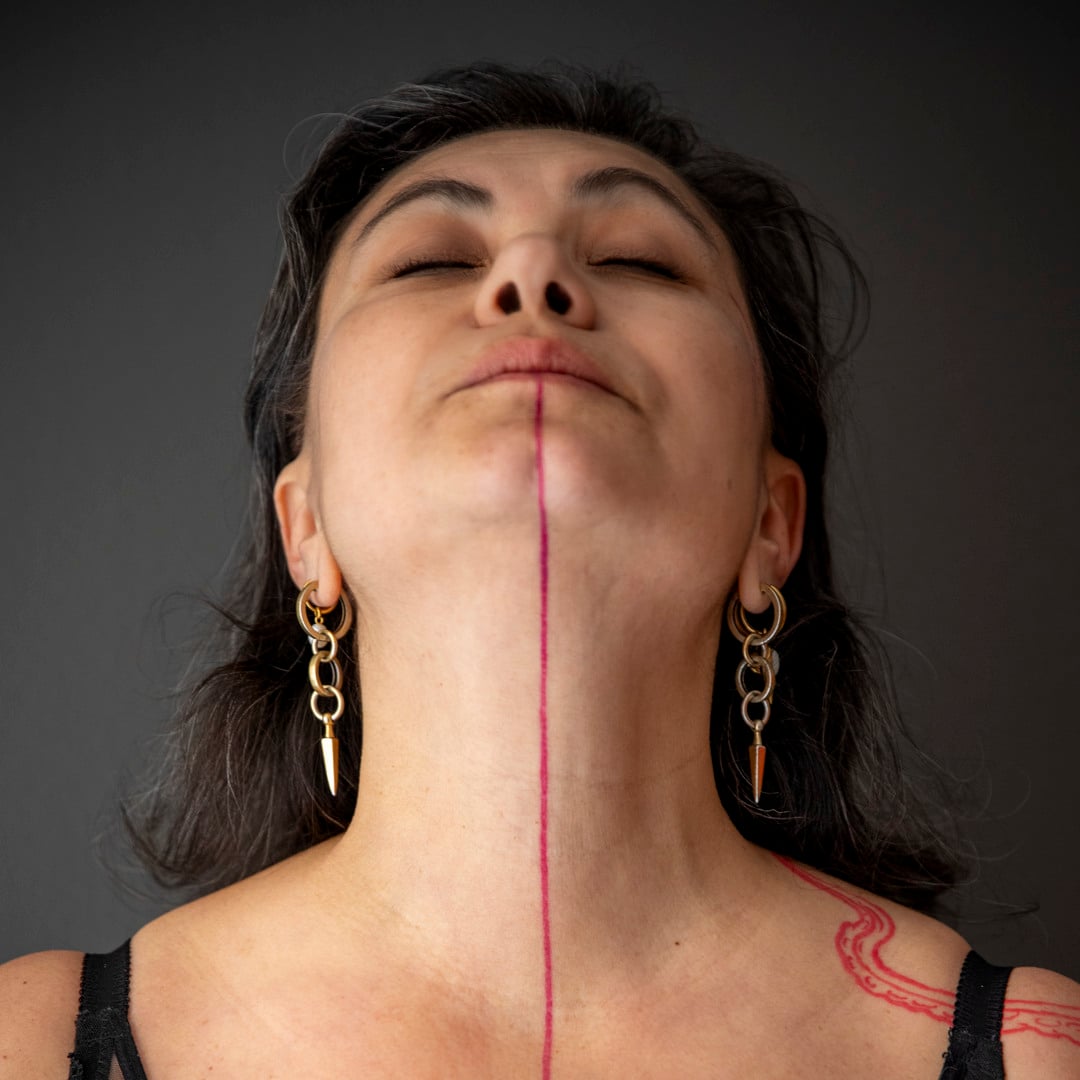
Elcim showing her tattoo from the lip to her heart

Elcim “Superturken” Yilmaz

I had the sudden urge for having a tattoo on my body. I have to have a red line, I thought. And it has to run from my lip to my heart. Twenty minutes after I’d said those words, I had the tattoo on my body.

Elcim’s red line was done in 2018, two days before she was due to organise a major concert at Globen in Stockholm for the first time. She was on the verge of breaking down from stress, worry and anxiety. The tattoo was a way of mending her body.


Photographer: Linda Edetun

Place: Sweden

PROGRAM